Mastering Tomato Exports: Documentation, HS Code & Quality Grading Standards from India
India, a land blessed with diverse agro-climatic conditions, stands as a global powerhouse in agricultural produce. Among its bounty, the vibrant tomato holds a special place, not just in Indian kitchens but increasingly in international markets. As global demand for fresh, high-quality produce surges, Indian tomatoes offer immense export potential. However, navigating the complexities of international trade requires meticulous attention to detail, particularly concerning Tomato Export Documentation, HS Code & Quality Grading Standards. At BRP International, a leading exporter of agricultural products, spices, rice, pulses, and fresh fruits & vegetables from India, we understand these intricacies and are committed to simplifying the export journey for our partners.
This comprehensive guide delves into the essential elements that define a successful tomato export operation, ensuring compliance, quality, and profitability.
Understanding Tomato Export Documentation: Your Passport to Global Markets
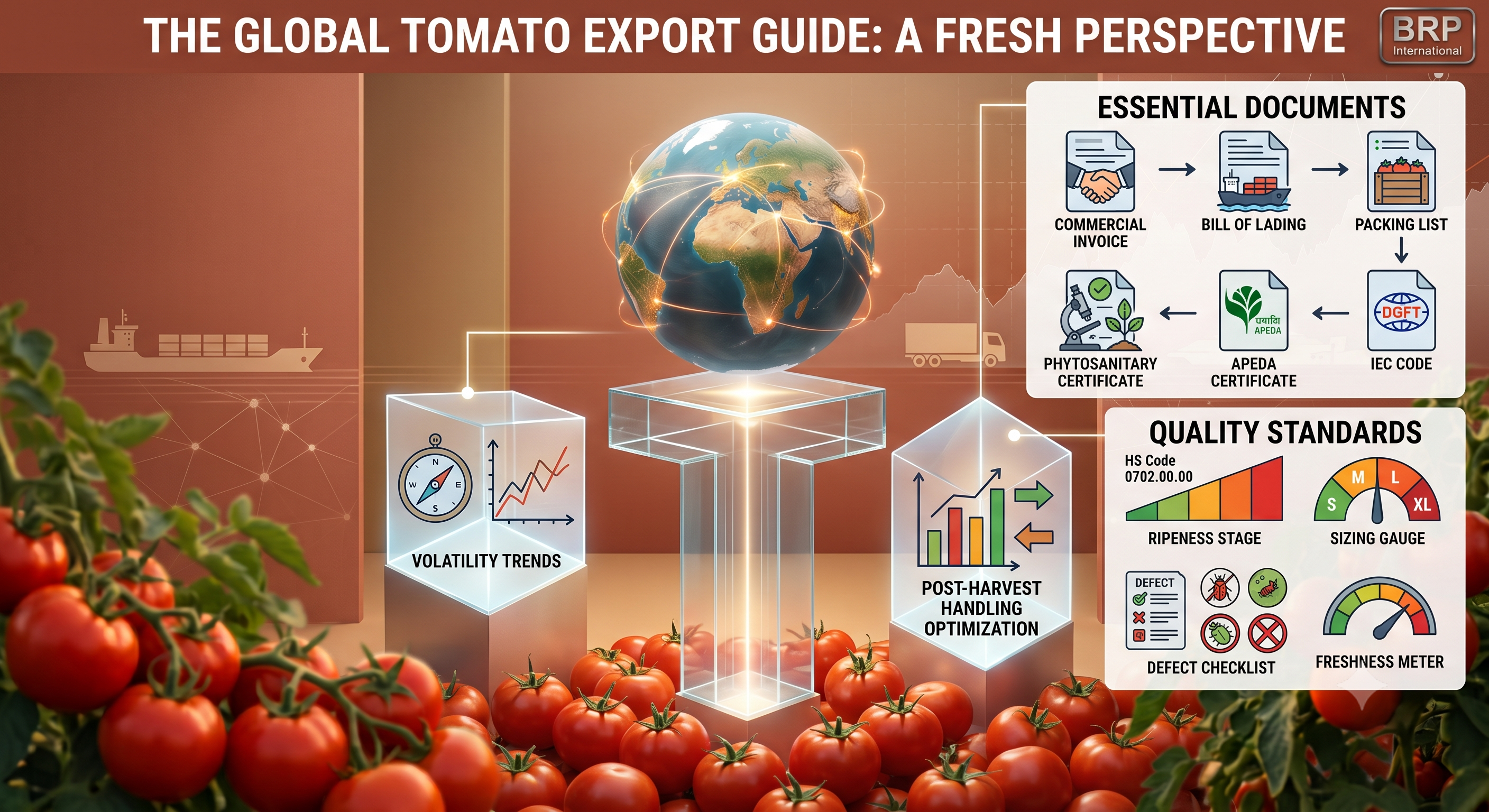
Exporting fresh produce like tomatoes is a highly regulated activity. Proper documentation is not merely a formality; it's a critical safeguard against delays, penalties, and even rejection at the port of entry. Each document serves a specific purpose, verifying the origin, quality, and legality of your shipment. Here are the key documents required for tomato exports from India:
- Commercial Invoice: This is the primary document detailing the transaction between the exporter and importer. It includes information such as the seller and buyer's details, description of goods (tomatoes), quantity, unit price, total value, terms of sale (Incoterms), and payment terms.
- Packing List: A comprehensive list of all items in the shipment, specifying the contents of each package, their weight, dimensions, and markings. This helps in cargo handling and customs verification.
- Bill of Lading (B/L) / Air Waybill (AWB): Issued by the shipping carrier, this document serves as a contract between the shipper and carrier, a receipt for the goods, and a document of title (for B/L). It details the origin, destination, consignee, and description of the goods.
- Certificate of Origin (CoO): Attests to the country where the goods were produced. For Indian exports, this is typically issued by authorized bodies like the Chamber of Commerce or export promotion councils (e.g., APEDA). It's crucial for availing preferential tariff treatments under trade agreements.
- Phyto-sanitary Certificate: Perhaps the most critical document for fresh produce. Issued by India's Plant Quarantine authorities, it certifies that the tomatoes are free from pests, diseases, and meet the phytosanitary requirements of the importing country. Without this, your shipment will not clear customs.
- Import Export Code (IEC): A mandatory 10-digit code issued by the Directorate General of Foreign Trade (DGFT), essential for any entity involved in import or export activities in India.
- APEDA Registration Certificate: As tomatoes fall under the purview of the Agricultural and Processed Food Products Export Development Authority (APEDA), registration with APEDA is mandatory for exporters to access various benefits and comply with quality standards.
- Fumigation Certificate: If the packaging materials (like wooden pallets) or the produce itself require fumigation to prevent pest infestation, a certificate from an authorized agency is necessary.
- Insurance Certificate: While not always mandatory, cargo insurance is highly recommended to protect against loss or damage during transit, especially for perishable goods like tomatoes.
- Other Country-Specific Documents: Importers may require additional certificates, such as a Non-GMO certificate, residue analysis reports, or specific health certificates, depending on their national regulations.
Decoding the HS Code for Fresh Tomatoes
The Harmonized System (HS) Code is an internationally standardized system of names and numbers to classify traded products. Correct HS code classification is vital for determining applicable tariffs, taxes, and trade regulations. For fresh tomatoes, the universally recognized HS Code is:
HS Code: 0702.00.00
This code specifically refers to 'Tomatoes, fresh or chilled'. While the first six digits (0702.00) are globally harmonized, the subsequent digits (in this case, .00) can vary based on national tariff schedules. Always verify the full 8-digit or 10-digit code with your customs broker or the importing country's customs authority to ensure accuracy and avoid discrepancies that could lead to delays or incorrect duties.
Ensuring Quality: Tomato Grading Standards for Export Success
Quality is paramount in the fresh produce market. Premium quality tomatoes command better prices, ensure repeat business, and build a strong reputation. Adhering to stringent quality grading standards is non-negotiable. BRP International meticulously follows both national and international benchmarks to deliver only the finest produce.
Key Quality Parameters and Grading Standards:
- Maturity and Ripeness: Tomatoes must be harvested at the correct stage of maturity – typically 'mature green' or 'breaker' stage for long-distance transport, allowing them to ripen during transit without becoming overripe or soft. They should be uniformly developed.
- Size and Uniformity: Importers often specify size grades (e.g., small, medium, large, extra-large) to ensure consistency. Uniformity in size within a carton enhances presentation and market appeal.
- Color: Tomatoes should exhibit characteristic color for their variety at the specified stage of maturity. Uniform coloring is preferred, free from blotches or severe discoloration.
- Freedom from Defects: This is a critical criterion. Tomatoes must be free from:
- Physical Defects: Cracks, cuts, bruises, punctures, sunscald, shriveling, or any mechanical damage.
- Pest and Disease Damage: No signs of insect infestation, fungal growth, bacterial spots, or viral symptoms.
- Foreign Matter: Free from soil, leaves, or other extraneous material.
- Abnormal Moisture: No external moisture from condensation or inadequate drying.
- Firmness: Tomatoes should be firm to the touch, indicating good textural quality and shelf life. Soft or mushy tomatoes are unacceptable.
- Cleanliness: The surface must be clean and free from dirt, dust, or pesticide residues.
- Pesticide Residue Limits (MRLs): Compliance with Maximum Residue Limits (MRLs) set by the importing country is crucial. Regular testing and adherence to good agricultural practices (GAPs) are essential.
- Packaging and Post-Harvest Handling:
- Pre-cooling: Rapidly cooling tomatoes after harvest to remove field heat significantly extends their shelf life.
- Packaging: Tomatoes should be packed in sturdy, well-ventilated cartons or trays (e.g., corrugated fiberboard boxes) that protect them from physical damage during transit. Individual cells or dividers can prevent bruising.
- Temperature Control: Maintaining a consistent cold chain (typically 10-13°C for mature green tomatoes) throughout storage and transport is vital to prevent spoilage.
- Ventilation: Adequate ventilation within packaging and transport containers helps dissipate heat and moisture, preventing condensation and mold growth.
APEDA provides general guidelines for fresh fruits and vegetables, often aligning with international standards like those from the UNECE (United Nations Economic Commission for Europe) or CODEX Alimentarius. Exporters must be aware of and strictly adhere to the specific import requirements of their target market, as these can vary significantly.
Navigating Regulatory Compliance and Challenges
The journey of a tomato from an Indian farm to an international plate is fraught with potential challenges. Perishability demands swift and efficient logistics, while regulatory landscapes are constantly evolving. BRP International leverages its deep industry experience and robust supply chain network to overcome these hurdles:
- Cold Chain Management: Our state-of-the-art cold storage facilities and refrigerated transport ensure that tomatoes maintain optimal temperature from farm to port.
- Phytosanitary Expertise: We work closely with government agencies to ensure all phytosanitary requirements are met, securing necessary certifications promptly.
- Market Intelligence: Staying updated on global market trends, demand fluctuations, and specific import regulations of various countries allows us to advise our clients effectively.
- Traceability: Implementing robust traceability systems from farm to fork enhances transparency and builds trust with international buyers, crucial for quality assurance and recall management.
Partnering with BRP International for Seamless Tomato Exports
At BRP International, we pride ourselves on being more than just an exporter; we are your strategic partner in agricultural trade. With a steadfast commitment to quality, compliance, and customer satisfaction, we streamline the entire export process for fresh Indian tomatoes. From meticulous documentation and precise HS code classification to stringent quality control and efficient logistics, we handle every detail, ensuring your produce reaches its destination fresh, compliant, and on time.
Our expertise in the agricultural export sector, combined with our extensive network and adherence to international best practices, makes us the preferred choice for businesses looking to tap into the lucrative global market for Indian tomatoes. Trust BRP International to elevate your export ventures.
Ready to explore the world of opportunities for Indian tomatoes? Contact BRP International today to discuss your export needs.